Behavior Tracker ABC
An ABC behavior tracker app for parents and carers. Log meltdowns, severity and duration, review patterns, and export records for school or family discussions.
On this page
A private ABC behaviour tracking app for parents and carers.
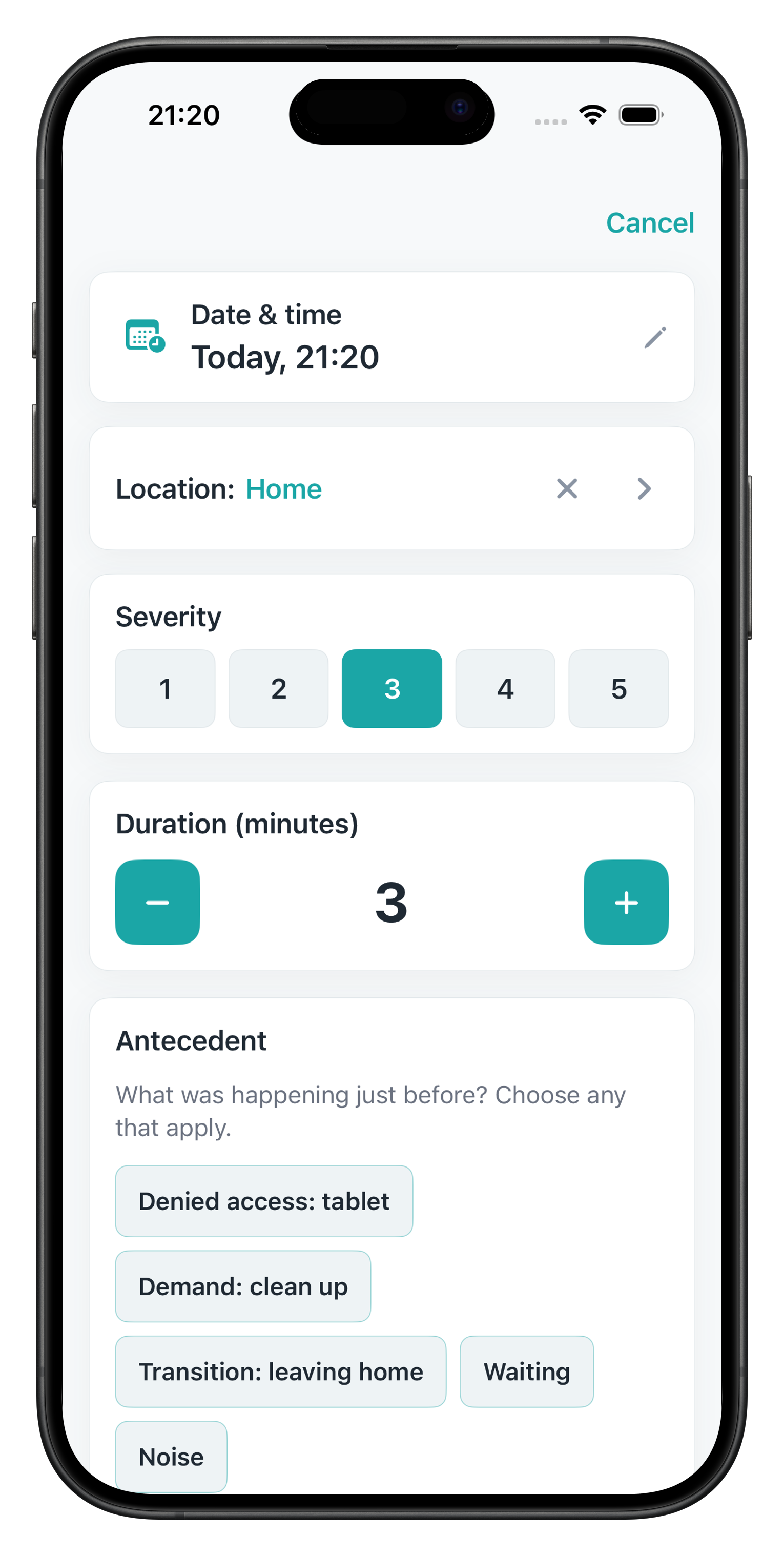
Behavior Tracker ABC is an ABC behavior tracker app for iPhone and iPad. Record what happened before, during and after meltdowns or difficult moments, track severity and duration, and review patterns over time.
Keep notes in your own words, including what seemed to help. Insights can help you compare common routines over time — without turning family life into paperwork.
Why we built it
When a child is distressed, it can be hard to remember the details later.
What happened just before? How long did it last? What helped? Was this worse than last week, or just more memorable because it was hard?
Behavior Tracker ABC gives families a simple way to capture the important details while they are still fresh, so patterns are easier to notice over time.
Who built Behavior Tracker ABC?
Behavior Tracker ABC was developed by Amarjit Gill for Steady Neuro.
Steady Neuro grew from navigating meltdowns, transitions and overwhelm at home. The app follows the same practical approach as the rest of the site: keep the tool calm, clear and manageable enough to use during real family life.
It is a logging and pattern-review tool, not a clinical assessment. It does not diagnose your child or decide why a behaviour happened.
What is an ABC behavior tracker?
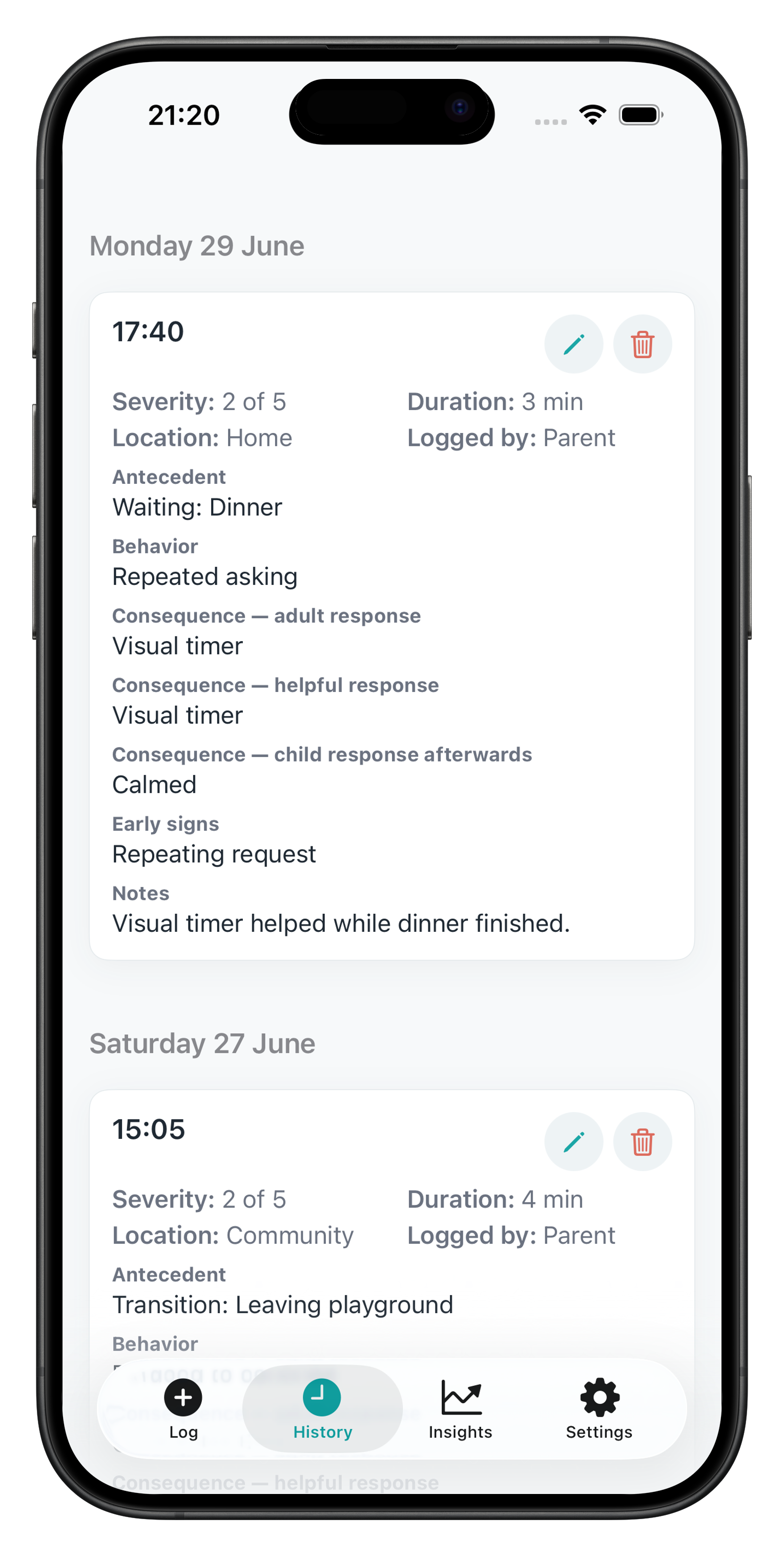
An ABC behavior tracker is a structured log of what happened before a difficult moment, what you observed, and what happened afterwards. Behavior Tracker ABC uses this format to help parents keep consistent notes.
Include what seemed to help too, while the details are still fresh.
This makes it easier to spot repeated triggers, prepare for conversations with school or professionals, and understand whether patterns are changing over time.
If you want to try the format on paper first, our guide to using an ABC behaviour chart includes a simple example.
What should you record in a behavior log?
Record the date, approximate time, what happened before, what you saw or heard, and what happened next. In the app, you can also note:
- Meltdowns and self-injurious behaviour
- Triggers and antecedents
- Early warning signs
- Severity and duration
- Location and time of day
- What helped
- Notes for home, school, or professionals
What does ABC stand for in behavior tracking?
ABC means Antecedent, Behavior (Behaviour), Consequence.
In everyday language:
- Antecedent: what was happening just before
- Behaviour: what you saw
- Consequence: what happened afterwards, including what seemed to help
Here, consequence means what followed, not necessarily a punishment.
Behavior Tracker ABC uses this structure because it is a clear way to organise observations. It does not assess your child or decide what a behaviour means. It simply helps you keep notes in a consistent format.
How can parents track meltdowns over time?
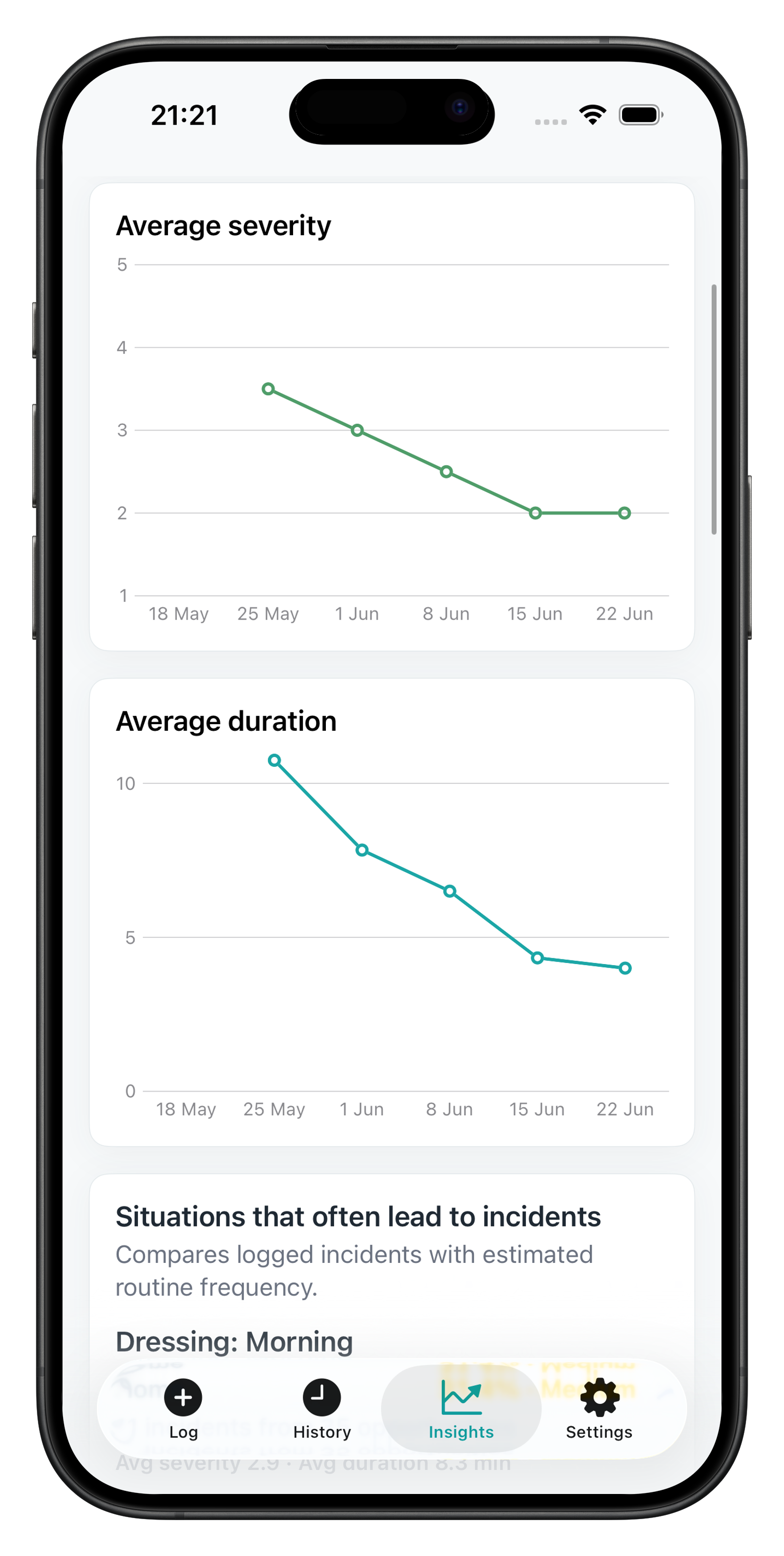
Keep a short record once everyone is safe and settled, then compare similar periods using the same approach to duration and severity. Look at the situations around each meltdown as well as the number of incidents.
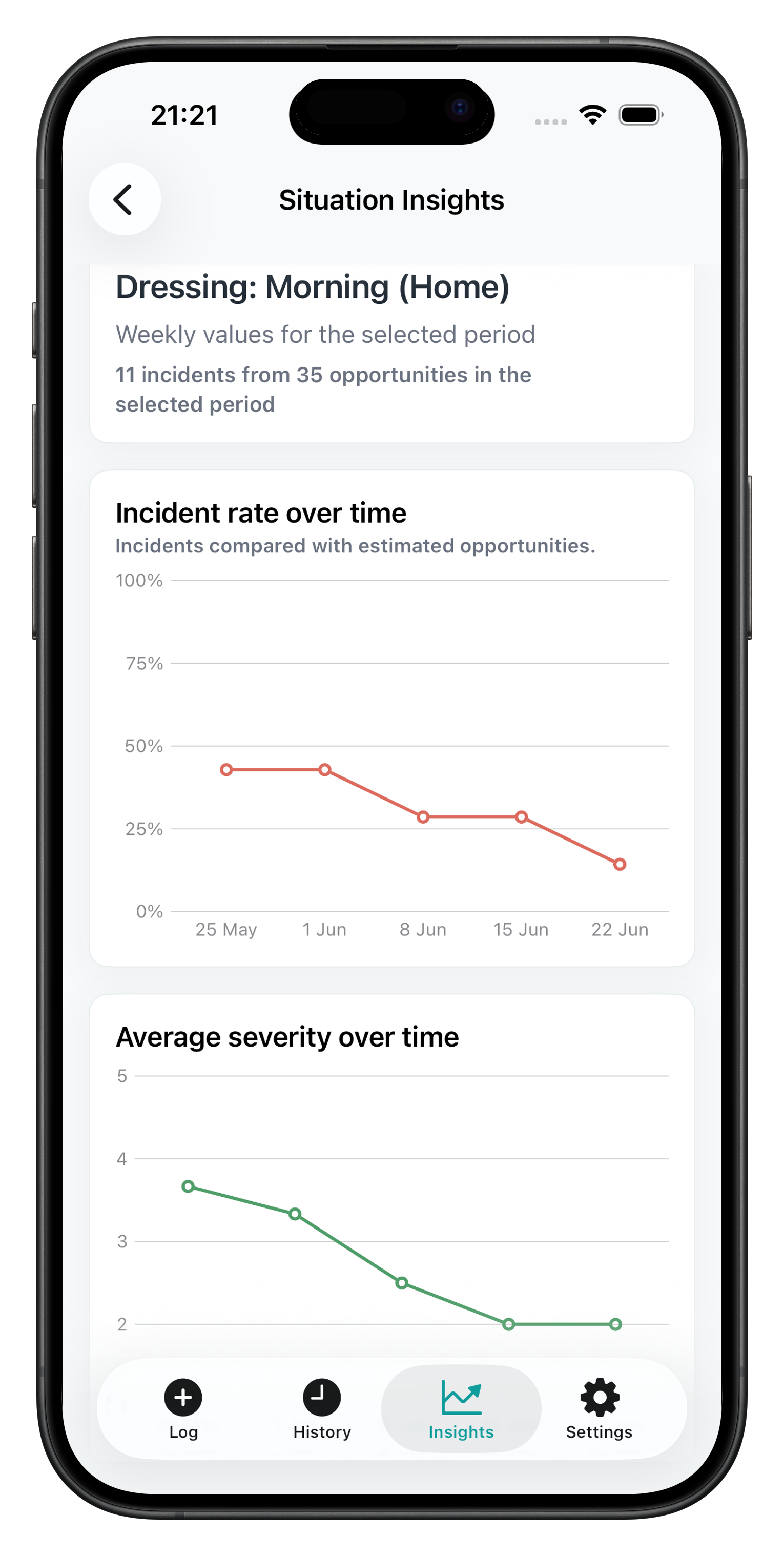
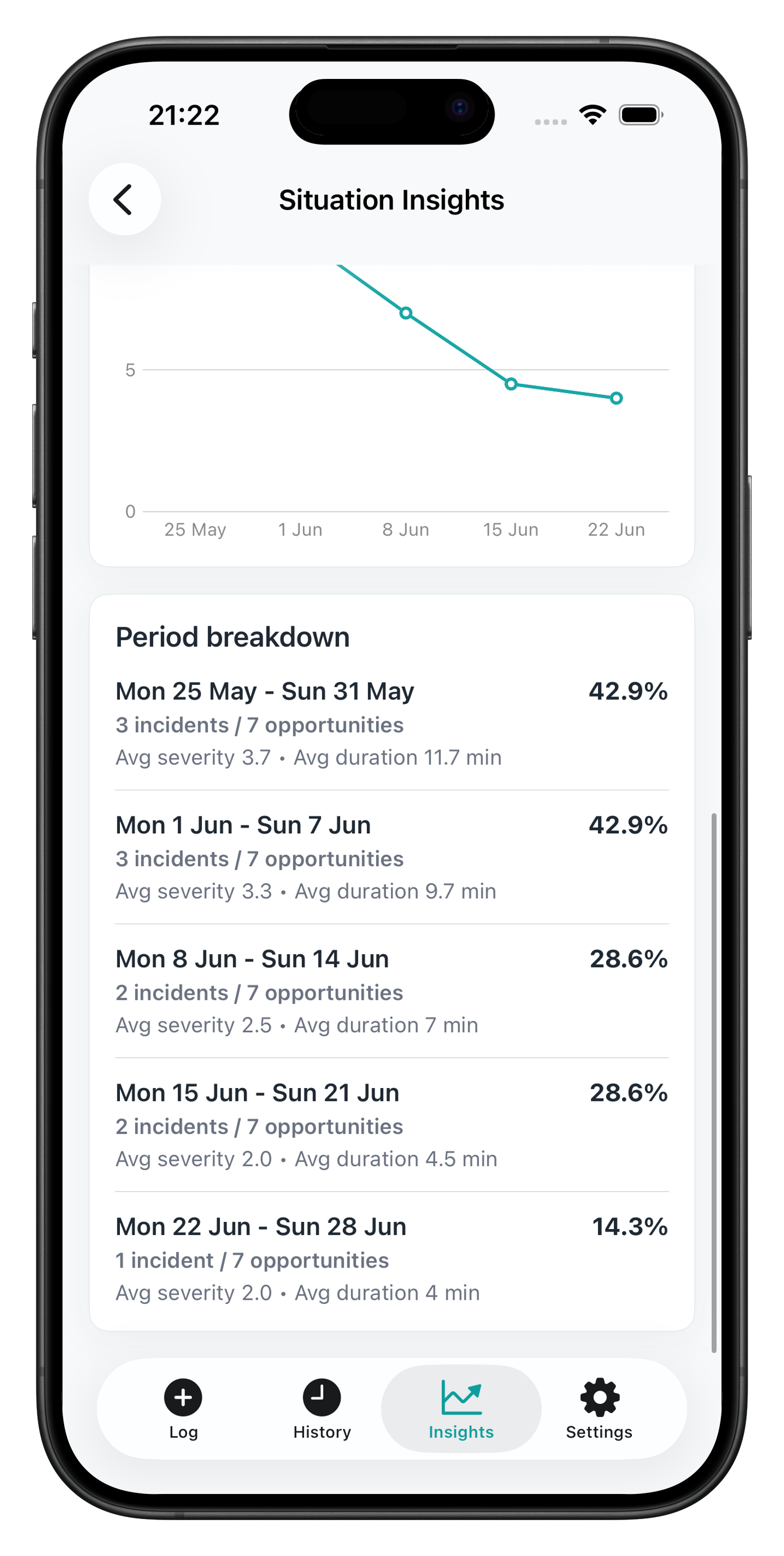
Behavior Tracker ABC can show weekly and monthly trends, common antecedents, severity, duration, and patterns over time. You can also add common situations, such as morning dressing, waiting for dinner, bedtime, or leaving the house, and estimate how often they usually happen.
That helps compare incidents with routine frequency.
For example, 3 incidents in a week may mean something very different if the routine happened 3 times or 30 times.
These insights can help you prepare for tricky parts of the day and explain what you are noticing without relying on memory alone.
An illustrative ABC tracking example
Imagine that getting dressed for school became difficult on three mornings this week.
One log on its own might say:
- Antecedent: the usual jumper was unavailable and it was nearly time to leave
- Behaviour: your child covered their ears, threw the other jumper and hid behind the sofa
- Consequence: you used fewer words, gave them space and later offered two alternatives
- What helped: time, less talking and a choice between familiar tops
This example does not prove that the missing jumper caused the distress. But if several logs show that clothing changes, time pressure and extra instructions often appear together, you have a pattern worth exploring.
The routine-frequency view adds context too. Three incidents during a routine that happened three times means something different from three incidents during a routine that happened 30 times. Behavior Tracker ABC helps you compare the difficult moments with how often the situation actually occurred.
Designed for real family life
Behavior Tracker ABC is built for quick logging, not perfect record keeping.
It supports separate child profiles, saved history, editable logs, severity and duration tracking, common situations, routine frequency estimates, and notes you can write in your own words.
You can also export logs and summaries to help prepare for conversations with family members, carers, schools, therapists, or behaviour specialists.
The design keeps the information practical and private, with no separate Steady Neuro account system for behaviour logs.
Not a replacement for professional support
Behavior Tracker ABC does not diagnose, treat, or replace advice from a qualified professional. If your child is at risk of harm, seek urgent support from local emergency or health services.
It can help organise observations and patterns, but it is not a medical device, clinical assessment, safeguarding tool, or behaviour support plan.
Frequently asked questions
Is this only for autistic children?
No. It is designed to be diagnosis-agnostic for families supporting children with additional needs, communication differences, distress, meltdowns, or self-injurious behaviour.
What is an ABC behaviour tracker?
An ABC behaviour tracker is a way to record Antecedent, Behaviour and Consequence information.
That means noting what happened before an incident, what behaviour was observed, and what happened afterwards. Behavior Tracker ABC helps parents and carers keep those notes in a consistent format, alongside severity, duration, location, early signs and what helped.
Is this the same as an ABC behavior log?
Yes. An ABC behavior log uses the same Antecedent, Behavior and Consequence structure as an ABC behaviour chart or data sheet. You can keep these observations on paper or in an app.
“Behavior” is the US spelling of “behaviour”; the recording approach is the same.
What are common situations?
Common situations are repeated routines or events, such as morning dressing, waiting for dinner, leaving the house, or bedtime.
You can estimate how often they usually happen each week. Behavior Tracker ABC can then compare incidents with routine frequency, which gives more context than incident counts alone.
Can I export behavior records for meetings?
Yes. You can export logs as CSV files and use the Reports & Insights in-app purchase to generate PDF reports for discussions with family, school or professionals. You choose what to share.
Review the information before sharing it and include only what the other person needs. Our guide to preparing an ABC behaviour summary for school explains how to keep the conversation focused on observations and useful questions.
Is Behavior Tracker ABC free?
The app is free to download. An optional one-time in-app purchase unlocks Reports & Insights, including PDF reports. There is no subscription.
Can schools use it?
It is designed for parents/carers, but the information can help conversations with school. If a school or organisation is interested in using Steady Neuro tools, they can contact us.
Does it replace a behaviour specialist?
No. It helps organise observations and patterns. It does not replace assessment, safeguarding, clinical advice, or a behaviour support plan.
Where is the data stored?
Behavior Tracker ABC stores your data on your device.
If iCloud sync is available and enabled in the app, your data may also be stored in your private iCloud account so it can sync between your Apple devices. Steady Neuro does not operate a separate account system for Behavior Tracker ABC and does not run its own cloud database for your behaviour logs.
Steady Neuro cannot read your private iCloud data.
Privacy and support
You can read the full Behavior Tracker ABC Privacy Policy.